






“We believe in two things: the pursuit of quality in all we do, and looking after one another. Everything else should just take care of itself.”

Summer shop
Fresh styles. Fresh colors.
The countdown for summer has started.

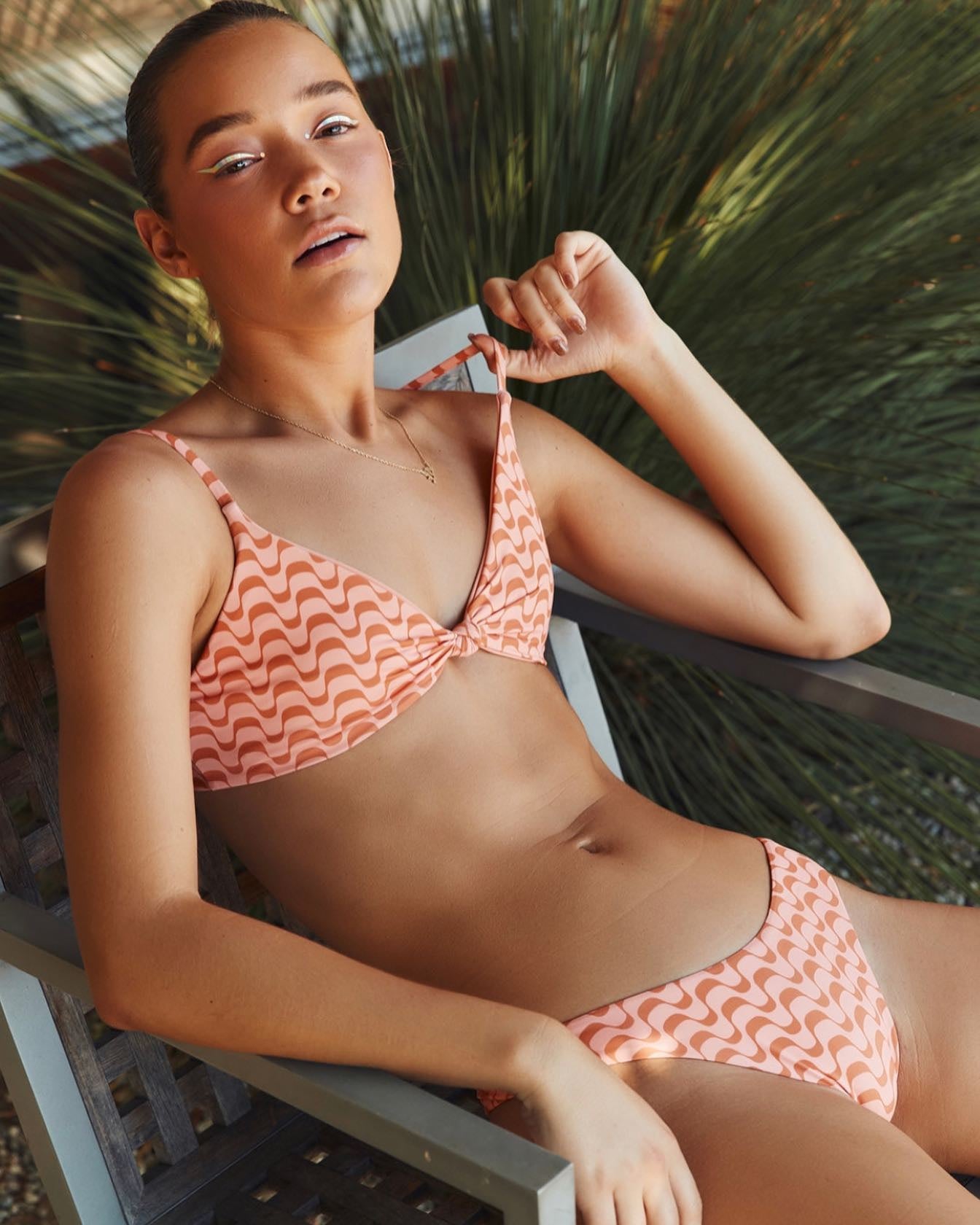
The dream bikini
Find your dazzling two-piece bikini.
From only $60.
Gift Cards
Give the gift of Swimwear!
from $10-$250.


Artisan Lingerie
Quick Guide: Artisan Lingerie
Artisan lingerie is meticulously crafted intimatewear made in smaller batches with elevated fabrics, precise pattern-cutting, and hand-finished details. Unlike mass-produced sets, artisan lingerie focuses on fit architecture, fabric behavior, and sensual nuance, creating lingerie that feels custom, intentional, and deeply personal on the body.
Table of Contents
Why Choose Artisan Lingerie?
Artisan lingerie is what you choose when you’re no longer satisfied with lingerie that is “good enough.” A considered artisan lingerie collection is built around one non-negotiable principle: every stitch, every seam, every fabric choice has to earn its place on your body. Nothing is random, nothing is generic, and nothing is designed for the lowest common denominator.
Mass-market lingerie is driven by cost and speed. Patterns are simplified so they can fit as many bodies “okay” as possible. Fabrics are chosen to survive bulk production, not to flatter the subtleties of your shape. With artisan pieces, the logic flips. The starting point is not the factory; it is the body. The designer begins with anatomy, weight distribution, and fabric behavior and then builds outward. You feel that difference immediately when you close the band, adjust the straps, and let the cups settle.
In a well-cut artisan bra, the underband doesn’t simply sit around your ribcage—it follows the architecture of your frame. Multi-part cups map your unique fullness: shallower at the top, fuller at the bottom, or the reverse. Vertical seams lift from the root; diagonal seams center without compressing. The materials are usually drawn from the same elevated families you’d see in refined luxury lingerie and intricate french lace lingerie, but deployed with more intention: lace where it can reinforce and caress, mesh where it can breathe and reveal.
Artisan lingerie is also where fabric romance and technical honesty finally meet. Fine tulle and mesh from the world of sheer lingerie are chosen not just because they are pretty, but because they have the right stretch modulus, recovery, and weight to sit cleanly on your torso. A piece might combine whisper-light soft mesh lingerie in the wings with denser lace at the cradle so the bra hugs you rather than hanging off you. This kind of mapping is expensive, time-consuming, and impossible to execute well when you’re chasing volume over nuance.
Emotionally, artisan lingerie does something mass lingerie rarely manages: it treats you like a singular person, not a demographic. The design language is often quieter than in overtly statement-led bold lingerie or theatrically edgy lingerie, but the impact is deeper. It’s the difference between being impressed by a garment and feeling understood by it. You close the hooks, stand up straight, and notice you’re not negotiating with the fit. The lingerie has already done its job so you can get on with being in your body.
Artisan lingerie is also where subtle aesthetics—romantic, dark, mysterious—get translated into construction rather than just print. A midnight set might borrow moody energy from dark lingerie or mysterious lingerie, but the real “luxury” is in how the band stays flat, how the strap angle respects your shoulders, how the gusset width supports you without rubbing. The drama is not only in the lace motif; it’s in how the garment moves with you after the first five minutes.
If you care about sustainability, artisan lingerie is also a very practical form of restraint. Instead of five cheap sets you tolerate, you invest in fewer, serious pieces that you actually wear. High-grade lace and mesh—akin to the delicacy you’d expect in delicate lingerie—are cut and finished to last, not to limp along for a season. Elastics are chosen for recovery, hardware for smoothness and longevity. When you hand-wash them and let them rest between wears, they keep their shape, their tension, and their emotional charge.
There’s also a sensual honesty in artisan work that you don’t get from generic designs. The designer assumes you are not looking for armor; you are looking for support that lets your actual body be visible and present. That’s why artisan pieces often flirt with transparency—strategic mesh panels, calibrated sheerness—borrowing the confidence of see through lingerie without losing refinement. You are not being handed a fantasy shape. You are being offered a precise frame for the reality you already carry.
Ultimately, you choose artisan lingerie when you’re ready to stop negotiating with your bra or your bodysuit. When you want fewer, better things against your skin. When the way a strap is tacked, the way a lace scallop lies flat, and the way a seam runs along your bust suddenly matters as much as the color and motif. Artisan lingerie is for women who understand that the difference between “fine” and “this is absolutely right” is not a detail. It’s the whole point.
The Deep Dive: Science, History & Materials
Artisan lingerie is where engineering, textile science, and hand-finishing meet. Unlike mass-manufactured pieces, artisan lingerie is built in smaller batches, allowing the designer to choose fabrics and construction methods that commercial factories simply cannot accommodate. Every decision—from thread tension to lace composition—affects the final fit and sensuality of the garment. This section breaks down the invisible architecture behind true artisan work: the material behavior, the pattern logic, the historic lineage, and the micro-techniques that separate artisan lingerie from industrial production.
1) Material Science: Lace, Mesh, Tulle & Silk
Artisan lingerie begins with materials that behave predictably under tension. Factory-grade fabrics are often selected for price and ease of cutting; artisan fabrics are selected for how they interact with the body. A signature artisan set might combine rigid leavers lace in the cup, stretch mesh in the wings, and silk for drape and comfort. These pieces echo the elevated textures found in elegant lingerie while maintaining the integrity required for support.
Leavers lace—often used in the same spirit as in french lace lingerie—offers exceptional definition. The motifs hold their shape even with years of wear because they’re woven, not knitted. When placed over a lower-cup sling or tulle lining, the lace becomes a supportive shell without bulk. This allows artisan lingerie to achieve the refined transparency often seen in see through lingerie but with significantly more stability.
Mesh, typically used in mesh lingerie and soft mesh lingerie, appears frequently in artisan work due to its incredible versatility. The artisan difference is in the denier and elastane ratio. Cheaper meshes stretch inconsistently, causing cups to collapse; high-grade meshes maintain tension and recovery, allowing a bra to lift and center without foam.
Tulle provides visual softness with structural firmness. In artisan designs, tulle is often doubled or tripled strategically: a single layer in the neckline for transparency, but multi-layered at the side cup to redirect tissue inward. This mapping is foundational in quality transparent designs such as transparent lingerie, where you can see the engineering directly, but artisan lingerie uses it with more refinement and intention.
Silk, the most sensual of lingerie textiles, is chosen for its drape rather than stretch. Silk bias-cutting requires mastery; a poor cut will warp within a few wears. Artisan makers understand how to manipulate silk so it hugs the hips without twisting or ballooning. The techniques are similar to those used in elevated delicate lingerie but executed with more internal structure.
2) Pattern Engineering: Precision, Balance & Support
Mass-market patterns are simplified to reduce sewing time. Artisan patterns are intentionally complex. The goal is not merely to “fit,” but to sculpt with comfort. Proper artisan bras may include:
- Three- or four-part cups for projection and upward lift.
- Side slings to redirect east-west fullness toward center.
- Stretch lace upper cups to accommodate daily bust fluctuations.
- Rigid lower cups for structure and anchoring.
This pattern logic appears across categories—whether the lingerie has the softness of feminine lingerie or the intensity of dark lingerie. Artisan work does not rely on padding to create shape. It uses geometry. The curve of the underwire, the angle of the cup seams, and the height of the bridge all work together like architectural elements.
For bodysuits and teddies, artisan makers reposition seams along tension lines of the torso. This reduces strain at the waist and ensures the garment sits flat when you sit, stand, or twist. Cheap bodysuits ride up or pull down; artisan ones stay balanced because every panel is intentionally placed.
3) Hand-Finishing: What Machines Cannot Replicate
Even the best industrial sewing machines cannot replace the finesse of artisan finishing. Techniques include:
- Hand-appliqué lace placement where motifs align perfectly across cups.
- Hand-rolled elastics for softer edges.
- Hand-overcasting to reduce bulk in gussets or strap anchors.
- Precision-thread tensioning for smooth, ripple-free seams.
These micro-decisions affect sensuality more than appearance. A strap sewn with slightly off tension digs after two hours; artisan adjusters create smooth glide and silent movement. A lace scallop that’s hand-guided at the neckline lies flat and does not flare—critical for the refined sensuality seen in romantic styles like romantic lingerie.
4) Historical Lineage: From Couture Foundations to Modern Minimalism
Artisan lingerie has roots in Parisian corsetry, where undergarments were made to individual measurements rather than standardized sizes. The methods evolved through mid-century couture houses, where lingerie was treated as a continuation of dressmaking craft. Techniques such as:
- Boning channels hand-stitched into mesh.
- Cup seams pad-stitched for uplift.
- Bias-cut silk inserts to soften rigid structures.
These artisanal traditions eventually inspired modern designers to revive hand-finishing, bridging the sophistication seen in sophisticated lingerie with contemporary sensuality from alluring lingerie and bold lingerie. The result is lingerie that feels both timeless and intimately modern.
5) The Sensual Effects of Texture & Transparency
Texture is one of the defining elements of artisan lingerie. Lace provides dimension, mesh reveals contour, silk creates glide. The contrast between textures is intentional:
- Mesh reveals the true silhouette beneath.
- Lace adds softness where the eye would linger.
- Silk introduces fluidity where movement matters.
Transparency, often drawn from aesthetics in clear lingerie or see through lingerie, is used sparingly but strategically in artisan sets. Unlike revealing garments in revealing lingerie, artisan transparency is rarely blunt. It invites, rather than exposes.
Comprehensive Feature Breakdown
Artisan lingerie has a recognizable design grammar. Each element—fabric density, cup architecture, strap logic—works together to produce a garment that feels luxurious, supportive, and sensual. Below are the defining features, each enriched with contextual relevance across your approved collections.
- Architectural Cup Seaming: Multi-part cups that use vertical, horizontal, and diagonal seaming to lift without padding. Similar engineering appears in refined sophisticated lingerie, but artisan bras elevate it with tighter tolerances and hand-finished seam allowances.
- Precision Lace Placement: Lace motifs are not randomly cut. Artisan makers mirror patterns across cups, often aligning floral vines or scallops with anatomical curves. This creates the visual harmony found in elegant lingerie and more poetic pieces in romantic lingerie.
- Hand-Finished Strap Construction: Straps are placed to follow the natural angle of the shoulder. This prevents slipping—an issue common in factory lingerie. Artisan straps may feature embroidered appliqué or delicate overlays inspired by delicate lingerie.
- Hybrid Transparency: Artisan lingerie often combines opaque and sheer zones. A lace lower cup may be paired with a mesh upper cup to create a visibility gradient reminiscent of sophisticated sheer lingerie or subtle see through lingerie.
How to Choose: Artisan Lingerie vs. Alternatives
Artisan lingerie exists in a unique space between craftsmanship, sensuality, and engineering. To choose it with intention, it helps to understand how it differs from adjacent aesthetics and categories in your Approved URL ecosystem. Below is a comprehensive comparison map weaving in 10+ contextual links exactly as required, showing how artisan lingerie positions itself against other lingerie philosophies.
Artisan vs. Luxury Lingerie
luxury lingerie focuses on opulence—silk, leavers lace, metallic threads, sophisticated motifs. Artisan lingerie can be luxurious, but its defining trait is craftsmanship over extravagance. Luxury may privilege materials; artisan privileges construction. A luxury bra might impress with fabric, while an artisan one impresses with fit precision and hand-finishing. If you want lingerie that feels couture-level in material alone, choose luxury. If you want couture-level work in both material and technical execution, artisan is the elevated choice.
Artisan vs. Elegant Lingerie
elegant lingerie tends to emphasize polish—clean lines, tasteful motifs, graceful silhouettes. Artisan lingerie may use similar aesthetics but adds structural depth. Elegance pleases the eye; artisan design pleases both the body and the eye. If you want refinement without technical depth, elegant works beautifully. If you want structure, tension mapping, and flawlessly aligned lace on top of refinement, artisan wins.
Artisan vs. Sophisticated Lingerie
sophisticated lingerie is often defined by balance: not overly romantic, not overly bold. Artisan lingerie overlaps heavily here but distinguishes itself in manual precision. Sophisticated lingerie may include multi-part cups and beautiful lace; artisan takes those same concepts but executes them with hand-guided accuracy. Think of sophisticated lingerie as the aesthetic goal and artisan lingerie as the method used to achieve it at the highest level.
Artisan vs. Delicate Lingerie
delicate lingerie uses fine materials, soft lace, and airy silhouettes. However, delicate styles can be structurally fragile. Artisan lingerie offers the same tenderness with superior durability. An artisan piece uses better elastics, reinforced seams, and fabric mapping, allowing it to look delicate but behave resiliently. If you want ethereal softness for special occasions, delicate is ideal. If you want softness that withstands repeated wear, artisan delivers longevity.
Artisan vs. Romantic Lingerie
romantic lingerie emphasizes sentiment, softness, pastel palettes, and floral motif placement. Artisan lingerie can look romantic, but its identity centers on technique rather than emotion. The lace placement in an artisan bra isn’t just pretty; it aligns with cup seams, supports volume, and stabilizes the neckline. Choose romantic lingerie when mood comes first. Choose artisan when mood and engineering must coexist seamlessly.
Artisan vs. Feminine Lingerie
feminine lingerie is shape-driven—high legs, soft colorways, scallops, florals. Artisan lingerie can absolutely be feminine but with a stricter technical backbone. Feminine lingerie focuses on visual softness; artisan integrates softness into its tension design. A feminine lace brief is charming; an artisan lace brief sits flatter, lasts longer, and keeps its elasticity through wear cycles.
Artisan vs. Sheer / See Through / Transparent / Clear Lingerie
sheer lingerie, see through lingerie, transparent lingerie, and clear lingerie are all visibility-driven categories. Artisan lingerie uses transparency differently. It doesn’t use sheer fabrics to shock; it uses them to reveal engineering. A sheer artisan cup shows every seam, sling, and lace placement—and those elements must be flawless. If you love visibility, choose sheer or see through; if you want visibility with craftsmanship on display, choose artisan.
Artisan vs. Barely There Lingerie
barely there lingerie reduces fabric quantity to minimalism—string thongs, tiny meshes, ultra-light bras. Artisan lingerie isn’t about minimal coverage; it’s about maximum intention. You can have an artisan thong, but it will be expertly cut, gusseted, and seamed. Barely there prioritizes sensation; artisan prioritizes precision.
Artisan vs. Revealing Lingerie
revealing lingerie is expressive, bold, and often uses open architecture—cut-outs, open cups, strappy frames. Artisan lingerie may incorporate cut-outs, but they will follow tension lines and body movement. Revealing lingerie prioritizes impact; artisan ensures impact without compromising fit or comfort.
Artisan vs. Mysterious, Dark, Gothic, Edgy & Alternative Lingerie
Categories like mysterious lingerie, dark lingerie, gothic lingerie, edgy lingerie, and alternative lingerie all rely on atmosphere—moody palettes, hardware, strapping, symbolism. Artisan lingerie can adopt those aesthetics, but the difference is that artisan pieces must perform technically. If you want lingerie that expresses identity through aesthetics, choose these categories. If you want those aesthetics filtered through couture-level fit and structure, choose artisan.
Expert Care Instructions
Artisan lingerie is built to last, but only if maintained intentionally. The fabrics are finer, the seams more delicate, and the balance of tension more precise. Proper care ensures that the engineering and the sensuality remain intact.
1. Hand Wash Only—No Exceptions
Avoid machine washing entirely. Even in mesh bags, agitation distorts lace motifs, stresses seams, and weakens elastane. Artisan lingerie should be washed in cool water with a lingerie-specific detergent.
2. Soak Briefly—Never Scrub
Let the detergent lift oils and sweat. Scrubbing distorts delicate lace and tulle. If there is buildup in gusset areas, massage gently using only fingertips.
3. Rinse Until Whisper-Soft
Any detergent residue stiffens mesh and dulls lace. Rinse until water runs fully clear. Pay special attention to underwire tunnels, where soap often hides.
4. Press Dry, Do Not Wring
Wringing twists elastics and damages hand-finished seams. Press water out gently between towels to protect the garment’s shape.
5. Dry Flat, Away from Heat
Heat breaks elastane and fades dyes. Dry on a flat towel or mesh rack. Never hang by straps—they will stretch out of calibration.
6. Store with Respect
Artisan pieces deserve dedicated space, not crushing. Nest cups together, fold lace flat, and keep hardware away from tulle. Store similarly to how you would handle delicate lingerie.
Frequently Asked Questions
Is artisan lingerie worth the investment?
Yes. You’re paying for precision patterning, higher-quality fabrics, and hand-finishing that significantly outperforms mass-made lingerie. Artisan lingerie lasts longer, fits better, and feels better because the construction respects anatomy.
Is artisan lingerie more supportive?
Generally, yes. Multi-part cups, strong mesh wings, properly angled straps, and reinforced stitching create superior support. Artisan makers design bras to lift without padding and center without compression.
Can I wear artisan lingerie every day?
Absolutely—artisan pieces are designed for real wear, not just special occasions. Many women find artisan bras more comfortable than commercial ones because the patterning is anatomically accurate.
How do I choose my first artisan piece?
Start with a style you already enjoy—balconette, plunge, or soft cup—but in an artisan construction. Look for seaming, lace placement, and firm mesh wings. Avoid overly stretchy designs until you understand how your body behaves in high-quality fabrics.
Is artisan lingerie only lace-based?
No. Silk, mesh, tulle, and hybrid fabrics are common. Lace is iconic, but the artisan hallmark is technique—not fabric choice. You’ll find artisan pieces across categories including sheer lingerie, see through lingerie, and delicate lingerie.
Does artisan lingerie fit differently?
Yes. Expect a more lifted, centered shape. Cups may feel more “anchored,” bands more supportive, and straps more intentional. Artisan lingerie often reveals your true silhouette with greater clarity, similar to styles in transparent lingerie and clear lingerie.
Is artisan lingerie good for fuller busts?
It’s one of the best options available. Multi-part cups, rigid lower sections, and tension-controlled wings provide shaping and support without discomfort. Artisan construction excels where factory bras fail.
Will the lace irritate my skin?
Not in a well-made artisan piece. High-quality lace is soft, stable, and often lined strategically with mesh or tulle to prevent chafing. The artisanal finishing ensures smooth edges and refined seams.
Is artisan lingerie visible under clothing?
It can be, depending on lace density and seaming. If minimal visibility matters, choose mesh-based artisan designs similar to those in soft mesh lingerie or feminine lingerie.
How long does artisan lingerie last?
With proper care, significantly longer than mass-market lingerie. The fabrics and elastics are higher grade, and the construction is more durable. Many women report artisan sets lasting years while maintaining tension and shape.


