
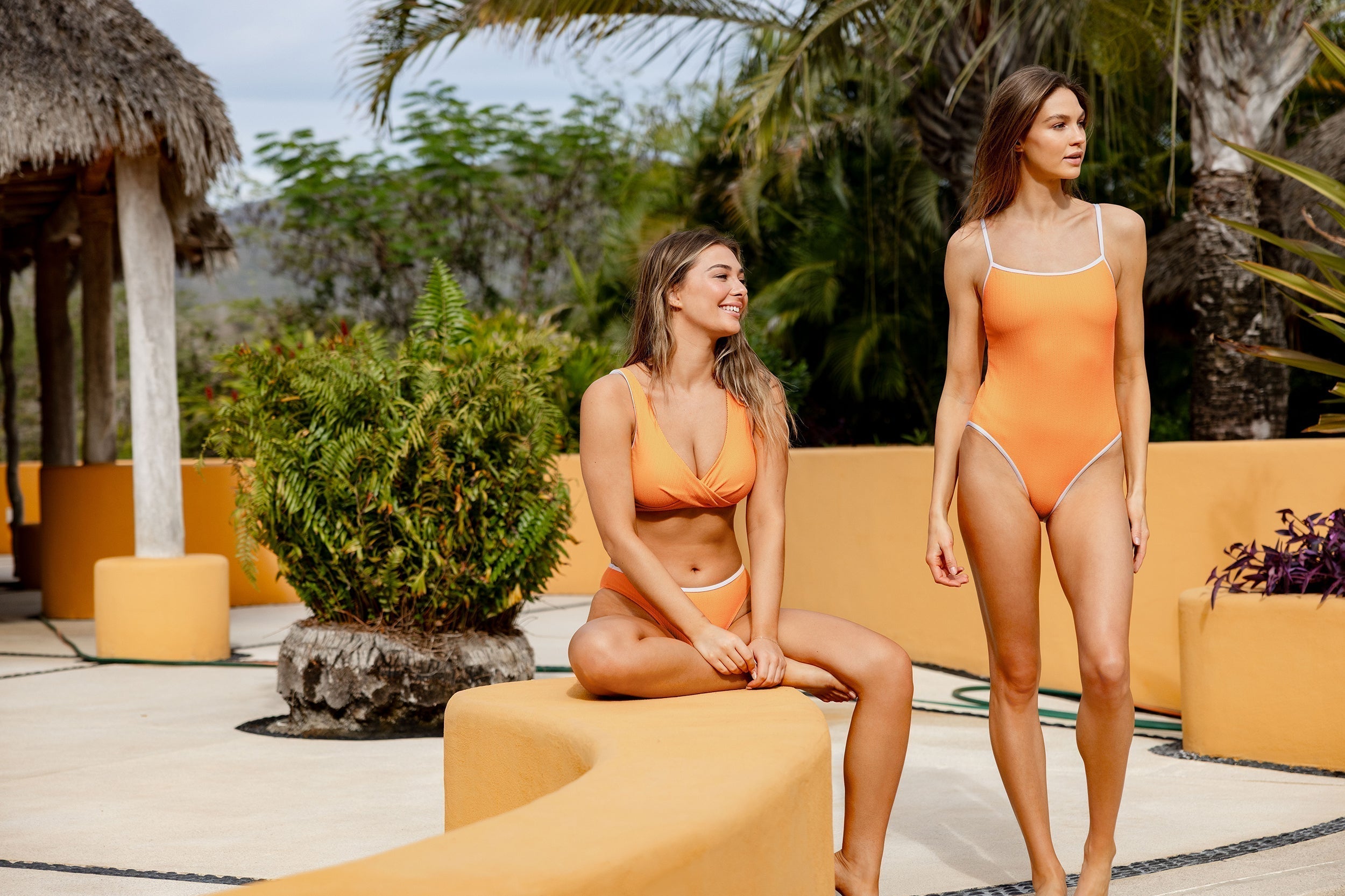





“We believe in two things: the pursuit of quality in all we do, and looking after one another. Everything else should just take care of itself.”
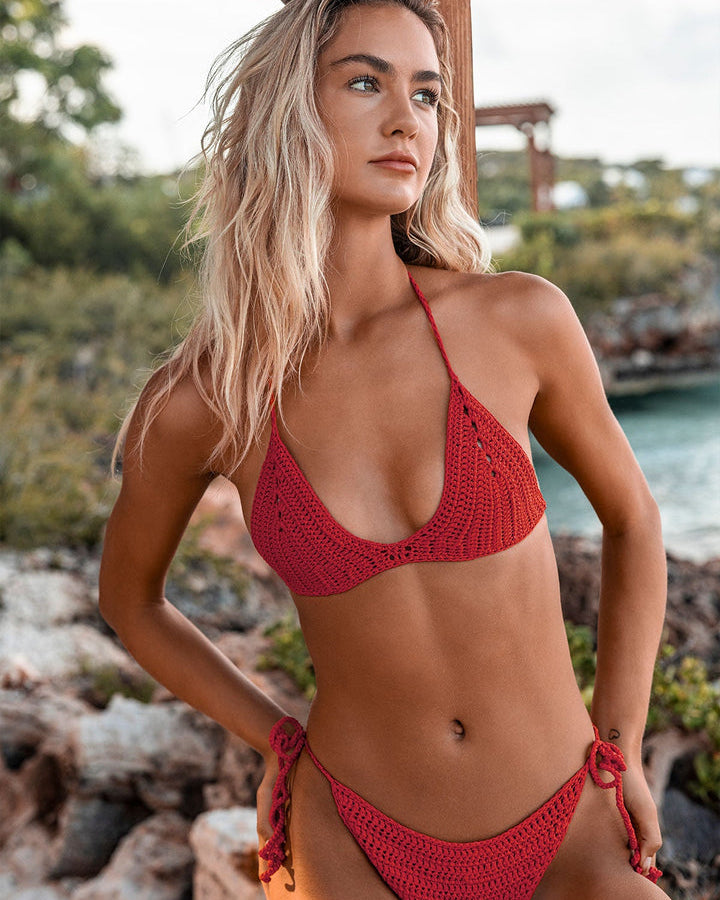
Summer shop
Fresh styles. Fresh colors.
The countdown for summer has started.
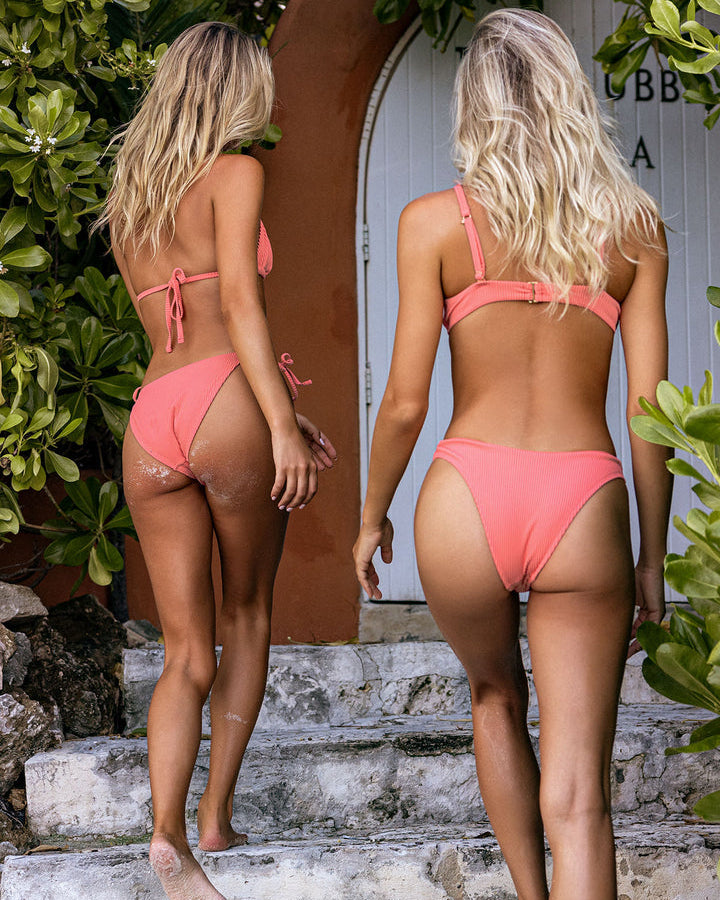
The dream bikini
Find your dazzling two-piece bikini.
From only $60.
Gift Cards
Give the gift of Swimwear!
from $10-$250.


Barely There Lingerie
Quick Guide: Barely There Lingerie
Barely there lingerie is ultra-minimal intimatewear that uses the smallest possible amount of fabric, ultra-fine straps, and sheer panels to cover just the essentials. It prioritizes sensation, freedom of movement, and deliberate exposure, making the body—not the garment—the main event.
Table of Contents
Why Choose Barely There Lingerie?
Barely there lingerie is the point where “underwear” stops trying to behave and simply becomes a frame for your body. When you choose from a focused barely there lingerie collection, you are not shopping for coverage—you are choosing how close to naked you want to feel while still wearing a garment engineered by someone who understands tension, support, and anatomy.
Visually, barely there designs remove anything unnecessary: extra fabric, heavy lace, wide bands, padded cups. What remains are fine elastics, micro panels, and carefully calculated cut-outs. Compared to softer, more diffused styles like sheer lingerie, these pieces leave less to the imagination and more to skin. The goal is not modesty; the goal is minimal interference.
On the body, the appeal is in sensation and freedom. Ultra-thin mesh, micro tulle, and narrow straps register far less as “clothing” and far more as the occasional reminder that something is touching your skin. If standard mesh lingerie feels light, barely there lingerie feels almost weightless. It’s the difference between “wearing something comfortable” and “forgetting you’re wearing anything until you choose to remember.”
Emotionally, this category shifts you out of the mindset of hiding or “fixing” anything. There’s simply nowhere to hide. A micro thong, an almost-open bra, a body made of lines instead of panels—none of these pretend to sculpt or disguise. Instead, they say: this is exactly what my body looks like, and I am not padding the truth. For many women, that directness feels more honest, more erotic, and paradoxically more liberating than a full-coverage set.
Barely there lingerie also acts as a bridge between lingerie and nudity. For people who want to explore visibility but aren’t ready for fully open styles, a minimal piece can create a psychological buffer: you are technically not naked, but your body is essentially on display. Paired with the right sheer fabrics, similar to those in highly transparent pieces from soft mesh lingerie, the result is exposure with just enough structure to feel intentional rather than vulnerable.
Finally, there’s a practical angle. Under certain clothing—bodycon dresses, cut-out gowns, ultra-high slits—full-coverage lingerie fights the garment. Barely there designs solve that conflict. A micro thong disappears under a second-skin skirt. A strip-front bra vanishes under a plunging cut. In that sense, barely there lingerie behaves like the invisible infrastructure of your bolder outfits, in the same way that more refined sets from revealing lingerie collections support explicitly daring silhouettes.
In short: you choose barely there lingerie when you want maximum sensation, minimum obstruction, and the clear, unfiltered presence of your own body. It is not for when you want to disguise yourself. It is for when you are ready to be fully, deliberately seen.
The Deep Dive: Science, History & Materials
Barely there lingerie may look simple—tiny triangles, thin straps, slivers of lace—but technically it is one of the hardest categories to engineer. When you remove fabric, you remove stability. Every millimeter of elastic, every stitch, every ring and slider has to carry more of the load. Below the fantasy, there is real physics, textile science, and pattern logic.
1. Load-Bearing on Minimal Real Estate
In a conventional bra, the band, cradle, and cups distribute weight over a relatively large surface. When the garment becomes minimal, the same load must be carried by smaller components: a thin underbust elastic, a narrow G-string hip strap, a single vertical seam. If those elements are not aligned with the body’s natural tension lines, they twist, dig, or fail.
That’s why well-designed barely there pieces borrow the same deep engineering seen in advanced sophisticated lingerie, just compressed into smaller geometries. A micro bra still needs correct strap angle, band tension, and cup positioning, even if the “cup” is effectively a narrow sling or a tiny triangle.
2. Elastic Behavior & Recovery
Elastics in barely there lingerie have to do more than in conventional pieces. With less fabric to distribute tension, the stretch and rebound characteristics of each strap are critical. Key parameters:
- Modulus: how quickly resistance increases as the elastic stretches. Too soft, and the garment slides; too firm, and it cuts.
- Recovery: the ability to return to original length after being stretched—essential for micro thongs and side straps.
- Edge finishing: plush-back elastics vs. raw or bonded edges determine whether minimal straps feel like caresses or cheese-wire.
Quality barely there pieces feel like lines drawn on the body, not like wires digging into it. That’s the same comfort philosophy you see in high-end luxury lingerie, applied with much less material.
3. Fabric Choice: Sheer, Thin, But Not Fragile
Most barely there designs rely on ultra-light fabrics: fine mesh, micro tulle, delicate lace. The trick is using them in small enough doses that they read visually as “almost nothing” while still resisting tearing and distortion. You’ll see similar cloths in tulle lingerie, but here they’re cut into tiny shapes that must flex without collapsing.
- Mesh: Often mid to high denier but in small patterns, giving strength without bulk—related to what you find in refined mesh lingerie.
- Tulle: Provides an illusion of emptiness while quietly holding tension across plunges, low backs, or narrow fronts.
- Lace: Used as a patch of coverage (over nipple or center front), drawing on dense motifs similar to lace lingerie and french-lace-lingerie, but scaled down.
4. Negative Space as a Structural Element
In barely there lingerie, empty space is part of the pattern. Cut-outs at the hip, center front, or underbust are drafted like panels: their size, angle, and curvature determine how the remaining fabric behaves. A cut-out that’s too large or poorly placed will cause neighboring edges to roll, gape, or dig.
This is where barely there overlaps the exposure logic of revealing lingerie, but pushes further. Here, the garment sometimes exists more as a frame around space than as fabric over skin.
5. Anchor Points: Where the Garment Grips
Because there is less fabric, anchor points become critical. Common anchors include:
- Underbust elastic that hugs the ribcage.
- Waist elastics that sit in a natural indentation rather than on the softest part of the abdomen.
- Hip straps that align with the high-hip line to lengthen the leg.
These anchors play a similar role to wider bands and wings in more traditional styles like elegant lingerie, but miniaturized. If anchors are off by even a centimeter, the garment will not stay in place under movement.
6. Psychological History: From Stagewear to Intimatewear
The “barely there” concept originally thrived in stagewear, swimwear, and fetish design—spaces where maximum skin with minimum garment was the goal. Over time, techniques migrated into everyday lingerie via micro thongs, string bikinis, open bras, and ultra-thin bodies. Today, barely there styles share visual DNA with bolder, subculture-driven pieces in alternative lingerie and edgy lingerie, but finish and fit have moved much closer to mainstream technical standards.
7. Emotion as a Design Constraint
Designers working in this category have to consider not just the physics of fabric, but the nervous system of the wearer. How exposed can someone feel and still stay grounded? Where does a thin strip of mesh feel erotic, and where does it tip into “I’m thinking about this more than I want to”?
The most successful barely there pieces borrow some of the quiet emotional intelligence you’d expect in soft, intimate categories like delicate lingerie or feminine lingerie, then strip the fabric back while preserving that respect for sensation and safety.
Comprehensive Feature Breakdown
Barely there lingerie is a toolbox of specific features designed to deliver maximum exposure, minimum interference, and carefully controlled sensation. Below is a technical breakdown of the key elements you’ll see, and what each one actually does.
- Micro Coverage Zones: Cups, fronts, and backs are reduced to their smallest functional footprints—narrow triangles, slim center panels, tiny lace patches. They cover the essentials and nothing else. These micro zones often borrow motif and motif placement logic from more traditional romantic lingerie, but shrunk down to pure essentials.
- String & G-String Backs: Thong backs become strings; hip panels become narrow elastics. This eliminates visible lines under clothing and maximizes skin feel. Compared to more substantial silhouettes in feminine lingerie, these are about absence, not softness.
- Ultra-High Leg Lines: Leg openings are cut higher to visually lengthen the leg and reduce fabric on the outer hip and thigh. On bodies with softer hips, this placement must follow the natural high-hip curve to avoid rolling.
- Open & Split Details: Barely there styles frequently include open backs, split cups, or keyhole fronts. These echo the exposure logic of revealing lingerie, but often with even less adjacent fabric, making the cut-outs feel more like absence than design.
- Sheer Hybrid Panels: Small patches of mesh or tulle are placed where complete bareness might feel too abrupt—at the center front, between cups, along the lower abdomen. These draw on the transparent language of transparent lingerie but in much smaller doses.
- Minimalist Strap Architecture: Instead of wide bands and multi-part wings, barely there bras use slender elastics and simplified strap layouts. The best of them still follow the same structural principles you’d see in well-made artisan lingerie: correct attachment angles, balanced tension, and strategic ring placement.
- Soft, Flat Finishing: With little fabric to diffuse pressure, edges must be smooth: bonded seams, narrow zig-zag stitches, or plush-back elastics. Harsh finishing that might be tolerable in a full brief will be unbearable in a micro G-string.
- Feather-Light Bodysuits & Bodies: Some barely there bodies are essentially a few seams and straps holding a minimal front and back together. In contrast to airier silhouettes in sheer babydoll designs, these bodies hug the architecture of the torso with almost no volume.
How to Choose: Barely There Lingerie vs. Alternatives
Barely there lingerie overlaps with several other aesthetics, but its core identity is “as little as possible, on purpose.” Understanding how it differs from neighboring categories helps you choose the right piece for your body, your threshold, and your intentions.
Barely There vs. Revealing Lingerie
revealing lingerie is exposure-led: cut-outs, open cups, dramatic windows. You can have a revealing piece that still covers quite a bit with sheer fabric. Barely there lingerie is material-led: it removes volume everywhere. A barely there thong may be less theatrically revealing than a complex harness set, but more genuinely minimal on the body. Choose revealing when you want design-driven exposure; choose barely there when you want almost nothing there at all.
Barely There vs. See-Through & Transparent Lingerie
see-through lingerie and transparent lingerie use large zones of sheer fabric so the body is visible, but technically covered. Barely there designs may use less transparency overall, but simply remove fabric entirely. If you want the experience of being looked at through a veil of mesh or lace, go transparent. If you want to feel air on your skin and just enough structure to call it lingerie, go barely there.
Barely There vs. Sheer Lingerie & Black Sheer
sheer lingerie and black sheer lingerie focus on how translucent fabrics play with light and shadow. They can be cut generously and still feel erotic. Barely there takes the same materials but shrinks them. If sheer sets make you feel seen, barely there sets make you feel exposed in a more literal, high-contact way.
Barely There vs. Bold / Edgy / Alternative
bold lingerie, edgy lingerie, and alternative lingerie lean into strong shapes, hardware, and attitude. Many of those designs actually cover more surface area; they just do it loudly. Barely there lingerie can be visually quiet—simple strings and triangles—but physically more naked. If you want graphic impact, go bold or edgy. If you want to feel like you reduced lingerie to its minimum lines, go barely there.
Barely There vs. Dark, Gothic & Mysterious Aesthetics
Collections like dark lingerie, gothic lingerie, and mysterious lingerie build mood: shadow, symbolism, emotional intensity. They may be revealing, but their primary job is atmosphere. Barely there lingerie may borrow black mesh or strapping, but its priority is reduction, not story. You can combine them—a barely there cut rendered in dark, shadowy fabrics—but structurally they serve different impulses.
Barely There vs. Romantic / Feminine / Delicate
romantic lingerie, feminine lingerie, and delicate lingerie center on softness: light lace, drape, and emotional gentleness. Barely there lingerie can be emotionally soft, but its physical impact is starker. Romantic pieces wrap; barely there pieces outline. If you want to be held, you choose romantic or delicate. If you want to be traced, you choose barely there.
Expert Care Instructions
Because barely there lingerie uses less material, every fiber matters. A stretched strap, a snapped ring, or a distorted edge can ruin the fit and feeling. Care is less about time and more about precision.
1. Hand Wash Only, Always
There is no spare structure in these pieces to survive machine agitation. Hand wash in cool water with a lingerie-friendly detergent. Close hooks and connect any removable straps first so nothing snags.
2. Treat Straps and Rings Like Hardware, Not Decoration
Support each strap with your hand while washing and rinsing. Avoid pulling or wringing, especially around rings and sliders. These tiny components are load-bearing in ways they never are on a full-coverage brief or bra from categories like elegant lingerie.
3. Avoid Heat, Bleach, and Softener
Heat destroys elastic memory; bleach and brighteners strip dye and weaken fibers; softeners coat fine mesh and tulle, making them cloudy and limp. Barely there fabrics need to stay sharp and elastic to keep sitting correctly on the body.
4. Dry Flat—Never Hang by a Single Strap
Lay pieces flat on a towel or a drying rack. Hanging a micro thong or bra from one or two straps concentrates all weight in the weakest points and gradually stretches them out.
5. Store Untangled and Supported
Minimal pieces tangle easily. Fold them carefully, nest small cups, and keep straps straight. If you store them with heavier garments—especially those with zippers or hooks—you increase the risk of snags. Treat them with the same care you’d give a fine, ultra-light piece from artisan lingerie.
Frequently Asked Questions
Is barely there lingerie only for “perfect” bodies?
No. Barely there lingerie does not require a specific body; it requires a specific mindset. The question is not “Do I deserve this?” but “How much fabric do I want between my skin and the world right now?” Soft bellies, full busts, narrow hips, broad shoulders—all of them can look extraordinary in minimal designs when the fit is correct and the wearer is choosing the exposure level consciously.
Can barely there lingerie be comfortable?
Yes—when it’s well made and sized correctly. Comfort depends on strap placement, elastic quality, and how anchors align with your natural curves. A micro thong in high-quality mesh may feel more comfortable than a badly graded full brief. If a barely there piece hurts, cuts, or constantly shifts, it’s a fit or construction problem, not an inevitable trade-off.
Is barely there lingerie the same as revealing lingerie?
They overlap, but they are not identical. Pieces from revealing lingerie collections are designed around visibility—where you’re exposed. Barely there designs are built around reduction—how little you’re wearing. Some garments are both, but you can absolutely have a very revealing body that still uses more fabric than a calm, ultra-minimal string set.
Can I wear barely there lingerie under normal clothes?
Yes, but you need to pair the right cut with the right garment. A micro thong disappears under tight skirts or dresses. A minimal, low-bridge bra works under deep V necklines where standard bras fight the cut. For everyday jeans and tees, some barely there styles will feel too unstable, while others will be perfect because you simply don’t feel them.
What’s a good “first step” into barely there if I’m nervous?
Start with a micro thong or string brief paired with a more familiar bra. That lets you experience the sensation of very little coverage on one half of your body while keeping the other half solid. From there, you can experiment with smaller cups, lower fronts, or bodies that use thin mesh instead of full panels, similar in spirit to soft-but-minimal designs in soft mesh lingerie.
Will barely there lingerie stretch out quickly?
Not if it’s well engineered and looked after. Because there is less material, poor-quality elastics or rushed sewing fail faster. But quality barely there designs use high-recovery elastic and well-finished edges. If you avoid heat, harsh detergents, and over-stretching, they can last as long as more substantial pieces.
Can barely there lingerie still feel romantic or feminine, not just explicit?
Yes. Minimal coverage does not dictate emotional tone. A micro lace thong with a soft scalloped edge, or a tiny triangle bra in fine floral lace, can feel as tender as anything from romantic lingerie or feminine lingerie. The difference is simply that more of your actual body is included in the conversation.
Is barely there lingerie a “step up” from sheer lingerie?
It’s a step sideways, not up. Pieces from sheer lingerie collections can be just as daring emotionally, especially when they cover more of you but without disguise. Barely there simply changes tactics: instead of showing you through fabric, it removes fabric almost entirely.
What’s the most important thing to check before buying barely there lingerie?
Check the anchors and the elastic. Where does the piece grip your body? Are those zones places you’re comfortable carrying tension—underbust, true waist, high hip—or are they going to slide onto softer areas and dig in? A good barely there garment knows exactly where it belongs on your frame and stays there without negotiation. That’s the difference between feeling almost naked and feeling like your lingerie is misbehaving.


